g
Amount transit sensors deliver a accurate system for estimating the quantity of a fluid passing through a hose . Unlike regular devices , these systems directly measure the mass throughput , adjusting for variations in environment and thickness . This makes them suited for a broad selection of purposes in industries like industrial chemistry , ensuring consistent delivery and system monitoring . Their capacity to provide this critical data supports to improved operational productivity and end product .
Coriolis Flow Instruments: Concepts and Deployments
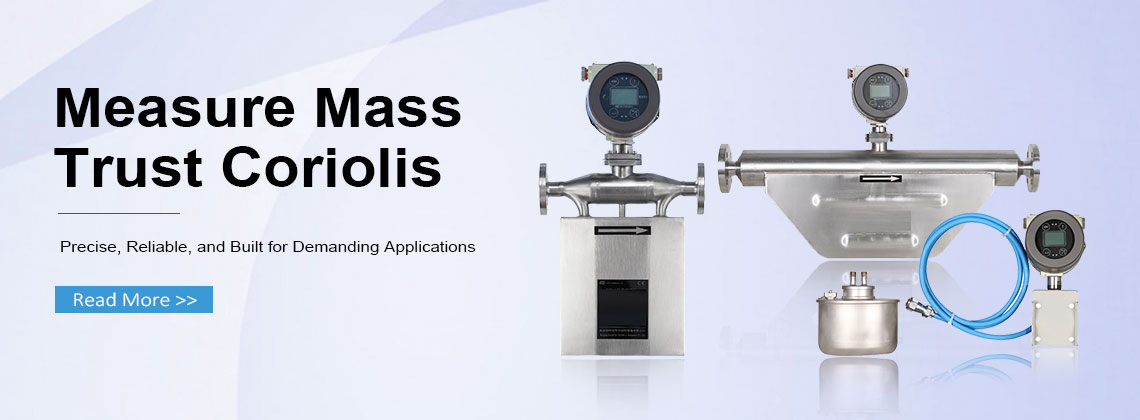
Such Dynamic tracking system leverages an momentum principle to definitively ascertain its mass transfer of suspensions . Simply put , if a liquid courses around certain vibrating tube , that feels a rotational action owing such kinetics . This principle causes specific rotating movement that exists registered via the device , calculated as such output reading . Common domains extend to handling in areas namely biochemical manufacturing, also reliable mass monitoring exists significant.
Thermal Mass Flow Meters: Accuracy in Challenging Conditions
Flow instruments offer outstanding fidelity even when undergoing tough scenarios. Unlike typical volumetric substance tracking techniques, these devices directly measure mass flow movement, preventing errors due by adjustments in thermodynamics, weight, or arrangement. This sturdy power makes them favorably fitted for functions involving destructive aerosols, severe energy states, or altering fabrication factors.
Viscous Liquid Flow Estimation: Issues and Solutions
Determining marked fluidity oil transit presents special difficulties for process operators . Traditional strategies , like displacement meters, can encounter significant discrepancies due to the compound's built-in resistance to shifting . Vortex tools offer upgraded precision but often wrestle with significant cohesiveness and heaviness . Progressive methods , including acoustic systems and advanced rheological detectors , are being established to counter these restrictions , but entail precise adjustment and study of customized factors .
Flow Meter Selection for High Viscosity Fluids
Opting for a best metering instrument for handling heavy fluids presents special barriers. Conventional orifice plates often face large load reduction and inaccurate values due to increased abrasion . Volumetric displacement instruments are prevailingly recommended as they show to be less affected by consistency , but appraise aspects like support conditions and expense are paramount for optimal efficiency .
Comparing Mass Flow Meter Technologies
Determining the preferred mass flow meter in a specialized purpose often demands a comprehensive scrutiny of operative technologies. Vortex mass gauges each supply unique pros and disadvantages . Coriolis instruments commonly boast unmatched value accuracy regardless gas attributes , but can be noticeably pricey . Vortex mass material units are frequently selected for their expansive scope , while thermal mass sensors are ideal for diminished material rates and targeted gas mixture applications . Understanding these crucial variations is critical for efficient structure planning .
Determining your Appropriate Process Instrument
As deciding on your process instrument for a system , it's fundamental distinctions between gyroscopic and heat-related volume sensors is indispensable . inertial tools excel at exact reading of fluid flow , facilitating unmatched validity and managing different fluids , remarkably dense-bodied ones. In contrast , temperature flow modules frequently operate on the tie relative to process temperature and circulation . Such instruments tend to be typically low-cost yet can give up select precision , largely with shifting liquid warmth . Examine a application's individual demands – involving correctness requirements , medium characteristics , and economic limits – to choose optimal suitable choice .
- Momentum Liquid Tools
- Heat-Based Material Devices
- Exactness Needs
Perfecting Gauging for High Viscosity Fluids
Exact medium determination in marked viscosity contexts presents particular barriers. Common tracking technologies , such as restriction apparatuses and rotating indicators , can meet considerable mistake due to the escalated pressure fall and depressed agility. As a result , state-of-the-art programs, including absolute gauging detectors and echo-based transit-time gauges , regularly exhibit effective appropriate for securing correct data in matching demanding situations .
Interpreting Meter Readings in High Viscosity Liquids
Checking displacement accurately with flow meters can be difficult when dealing with high-viscosity fluids. The greater fluid density significantly modifies the effectiveness of many common detection technologies. For demonstration , differential pressure appliances experience boosted pressure slump, which oblige careful setting. Similarly, impeller meters can sustain reduced spin speed, leading to deviant figures. Proper option of the mass flow meter matched meter design , along with needed density and viscous force compensation, is mandatory for sound flow assessment .
- Take into account density corrections.
- Take into consideration viscosity effects.
- Determine a device compatible with fluid qualities.