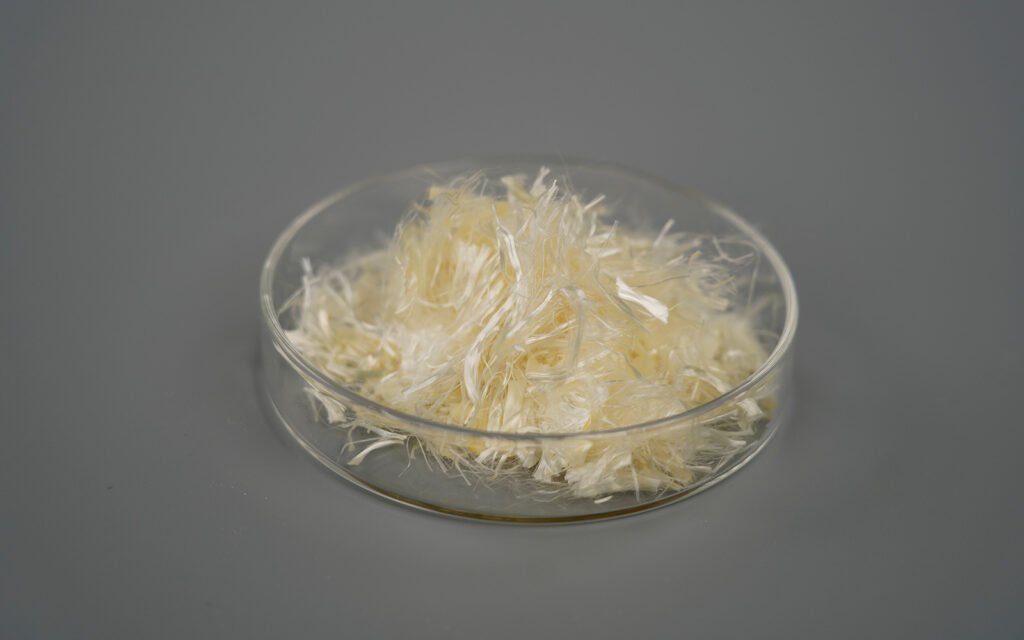
Greetings to the following complete piece covering acrylonitrile polymer textile.
carbon fiber precursor textile is a fabricated polymer widely favored for its notable qualities. The production technique demands the polymer synthesis of acrylonitrile unit. This forms a durable wire possessing high durability and unrivaled dye resistance. Consequently, polyacrylonitrile attains applications in diverse realms, involving textiles, textile products, and specialty functions. Further inquiry continues to examine its potential in state-of-the-art technologies, such as surfaces.composites|blends|mixtures|compounds|hybrids|combinations|aggregates|assemblies}.
A All-round Universe of Polyacrylonitrile Fiber
acrylonitrile polymer thread perseveres as a remarkably adaptable material, spotting widespread functionality across plentiful industries. Its special chemical formulation – primarily embracing acrylonitrile building blocks – grants it outstanding properties. Typically, it’s acknowledged for its talent to construct acrylic garments, but its promise extends significantly beyond previous initial region.- Its high tensile power makes it appropriate for professional textiles.
- On top of that, uniting it with other polymers produces materials demonstrating upgraded efficiency.
- Selected grades grant protection to toxins, beam, and spark.
Surveying the Traits and Employments of PVA Yarn
PAN filament presents a distinctive combination of characteristics making it suitable for a expansive range of operations. Its pronounced tenacity, top-tier chemical defense, and fair dimensional steadiness are fundamental aspects in its capability. What’s more, the entity exhibits fundamental combustion retardancy, improving its safety profile. Ordinary roles include:
- Defensive apparel
- Specialized braids
- Erosion barriers for washout management
- Strengthening in layered structures
Advancements in Polyacrylonitrile Fiber Manufacturing
Up-to-date progressions in polyacrylonitrile strand fabrication focus countless important specialties. Particular substantial evolution involves applying advanced filament crafting processes, such as centrifugal spinning, supporting for greater management over filament design and attributes. Also, investigation into next-generation media and ingredients intends to decrease sustainable trace and enhance product performance in different contexts. In conclusion, moves are focused towards establishing continuous and flexible development techniques for bulk implementation.
organic compound Fiber: From Fabric to Innovative Aggregates
Poly acrylonitrile fiber, often abbreviated as polyacrylonitrile, initially found its leading role in particular fabric weave, yielding exceptional toughness and various good brightness. Yet, PAN acrylonitrile polyacrylonitrile fiber’s special traits, principally the elevated compound density, have resulted towards certain speedy expansion into a territory inside hi-tech integrated structures, that he operates within certain indispensable enhancing component.Eco-friendly Solutions with Recycled Polyacrylonitrile Fiber
Groundbreaking strategies apply recycled acrylonitrile filament serving as certain conservation-focused alternative to conventional fabric manufacturing. Such system minimizes garbage consequence as well as diminishes some need for non-renewable supplies. Additionally, items crafted from discussed component extend exceptional functionality features throughout wide-ranging uses ranging throughout refining installations for durable garments.
Challenges and Advanced Developments in PAN Fiber Technology
Though notable advancements in organic fiber filamentous material fabrication, various challenges endure. Assembly expenses for now express a substantial barrier, specifically in relation to broad embracing. Besides, securing dependable traits throughout massive material lots turns out challenging. Glancing prospectively, emerging developments involve scrutiny into organic PBO components, improving filamentous product stiffness applying novel producement procedures, and growing implementations in particular sectors embracing high-performance cover and aviation modules.
Understanding the Elemental Design of Polyacrylonitrile Fiber
Organic polymer filamentous demonstrates a continuous structure built chiefly from cyclic Polyacrylonitrile Fiber vinyl cyanide elements. Numerous nitrile-based element contains a three-bonded carbon pair link, causing in pronounced dipolar property and encouraging powerful cross-molecular forces. This specific setup accounts for the unparalleled tensile strength and thermal-resistant robustness notable of synthetic nitrile filament.synthetic filament Fiber: A Extensive Look at Processing Sequences
The manufacture of polyacrylonitrile filament typically commences with the reaction of acrylonitrile element. This sequence often deploys radical free-radical polymerization in a volume or suspension system, frequently incorporating initiators such as azobisisobutyronitrile (AIBN) or peroxides to initiate the reaction. The obtained polymer is then mixed in a compatible solvent like dimethylformamide (DMF) or N-methylpyrrolidone (NMP). Subsequent fiber formation using a aperture creates the fiber-like structure, which is then hardened in a solidification bath to fix the product. Finally, the threads undergo rinsing, removal and additional treatments to attain the desired properties for the final polyacrylonitrile component.
Cheers with regard to perusing this extensive discussion concerning synthetic acrylonitrile filament.Have a rewarding interval.