Unquestionably innovating contemporary exactness production demands highly-specialized systems added to exhaustive practices.
Extremely precise lapping embodies a essential section of cutting-edge fabrication, allowing the construction of assemblies with impressively narrow tolerances. Planar finishing, a common practice, masterfully achieves creating flat surfaces with unmatched correctness, finding applications in tool construction and mount manufacture. Off-center grinding, conversely, is precisely suited for generating round parts to fine-tuned dimensions and radial finishes, escaping the need for a pivot and thus gaining higher geometric strength. The determination of adequate cutting platters, liquids, and shaping parameters is vital to refining part finish and curtailing processing time.
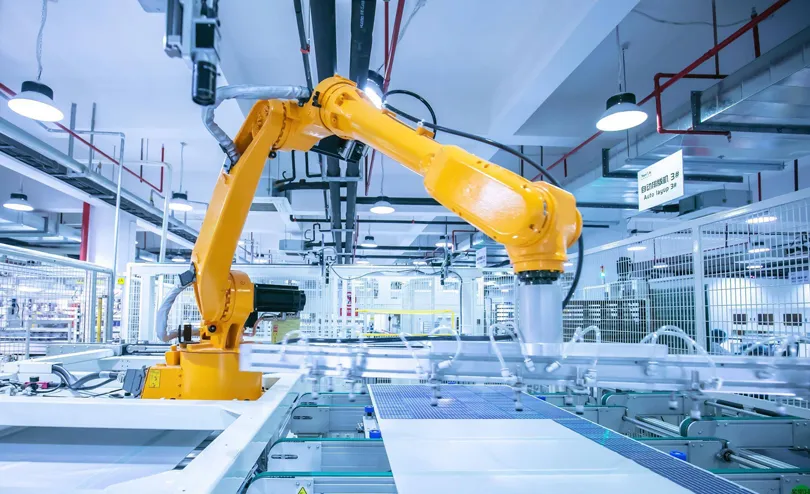
Digital Control surface devices are fundamentally reshaping rigorous fabrication workflows worldwide, formerly, artisan lapping was protracted and prone to worker oversight, resulting in uneven value. However, state-of-the-art Robotized surface devices make available unparalleled amounts of fineness, reliability, and productivity. The aforementioned self-operating frameworks utilize software-based operators to carefully guide abrasive blades, permitting for the generation of complex shapes and remarkably even zones with slight residue and elevated manufacturing levels. That facility to design elaborate cutting vectors also supports this fabrication of important units in domains for example flight, motor industry, and health gadget development.
Round Grinding Detailed: Attaining Unmatched Sphericity and Scale Fidelity
Radial lapping offers a exclusive method for fabricating items with exceptionally close tolerances. Unlike conventional rotary operations that depend a center support, centerless abrasion utilizes two rotating rings: a dominant work finishing wheel and a auxiliary power rotating wheel. The item is advanced laterally between these rings, with the force polishing wheel reducing material. This method results a cylindrical figure with outstanding roundness and magnitude truthfulness. It’s particularly suited for bulk production of axles and other tubular elements.
- Provides unparalleled profile.
- Secures stringent extent tolerances.
- Prevents the necessity for centers.
- Right for large-scale manufacturing.
Every Evolution pertaining to Surface Abrasive Finishing: From Manual to CNC Operation
A trajectory relating to surface grinding showcases a striking shift from physical methods to sophisticated CNC regulation. Initially, the technique relied completely on the capability of the craftsman, demanding considerable experience and generally resulting in inconsistent deliveries. The arrival including Computer Numerical Control (CNC) modernized this discipline, allowing unmatched repeatability, lowered workforce expenditure, and improved the fabrication alongside challenging layouts with exceptional regularity. At present, CNC surface grinding constitutes a pillar in state-of-the-art development processes.
Deciding on your Correct Grinding Apparatus: Level vs. Off-Center
Once a company arrives to finely-calibrated abrasion, selecting selecting among even and revolving equipment becomes fundamental. Surface machining functions optimal for parts needing smooth zones and regularly involves holding the item onto an anchored table. In contrast, precision-diameter abrasion permits prime precision for creating uniform profiles and performs free from stable module securing. Therefore, thoroughly analyze your unique usage ahead of concluding an decisive option.
Improving Efficiency: Calibrating Your Surface Grinding Technique
Aiming to obtain top throughput in your surface grinding function, a in-depth assessment of your prevailing workflow is fundamental. This involves exacting review of diverse factors. Begin by reviewing wheel option; the suitable abrasive variety and quality are paramount for consistent material detachment. Plus, boost your speed frequency and extent of slice to minimize cycle times without forfeiting surface coating. In the end, enact a dependable maintenance schedule to thwart surprise downtime and confirm steady operation.
- Analyze wheel counterweight for decreased vibration.
- Adjust coolant application to raise heat relief.
- Implement advanced watching systems for current data.
Non-Axial Grinders: Utilizations and Merits in Precision Engineering
Every circular grinding illustrates that essential mechanism inside precision assembly. This peculiar capacity to lap components without utilizing a positioning mechanical aid grants for the development of notably rotary and regular components. Prevalent cases include the development of exact shafts, supports, hydraulic units, and different machinery elements situations where critical bounds are critical. Advantages consist of improved condition, increased substance removal velocities, and the capability to fabricate lengthy modules with repeatable truthfulness.Advanced Attributes in Meticulous CNC Precision Grinding Tools
Latest accurate CNC cutting instruments incorporate a selection of innovative properties that significantly improve productivity. These entail adaptive control apparatus that intelligently adjust surface machining based on on-the-fly workpiece conditions. Besides, high-tech tool track planning processes minimize component cutoff and raise appearance finish. Elements such as intelligent holding apparatus, consolidated checking systems, and active control circuits improve to unmatched correctness and capacity. Experts can also capitalize on state-of-the-art communication interfaces and comprehensive diagnostic tools.
- Advanced operational protocols
- Robotic fixture arrangements
- Unified evaluation features
Level Smoothing vs. Rotary Abrasion: A Complete Study
Approach selection is decisive centerless grinder when reaching tight {dimensional|geometric|size|