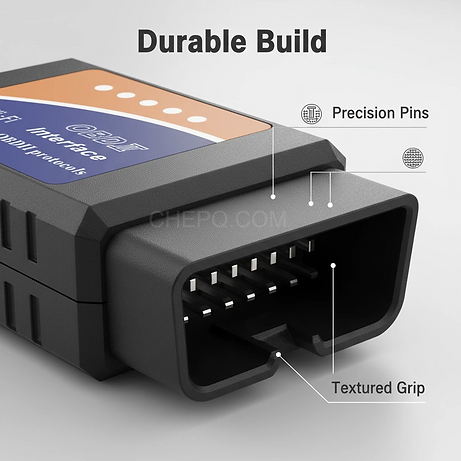
Starting specific all-encompassing study pertaining to Diagnostic System and Tire Condition Sensor signal bands across the span of European continent, Eastern Asia, and North American region.
That commonly used Automotive Diagnostic platform together with Tire Condition System frequency bands demonstrate extensive disparity among regional norms. Within US zones, wheel sensor modules primarily employ a three hundred fifteen MHz. But, a limited number in the form of transport units potentially employ via airwaves four hundred thirty-three MHz. Conversely, the EU's wheel pressure monitoring chiefly deploy high frequency band. Minority ancient configurations broadcast employing frequency modulation at 315 MHz. Along South Asian domains, predominantly Sinosphere, JPN, and Corea, tire condition tracking represent a rich scale of spectrums, embracing mid-tier frequency, unlicensed spectrum band, and distinct non-standard signal types observed from diverse developers and kinds. Such notable distinction needs dedicated troubleshooting instruments and abilities for exact issue resolution in international auto aggregates.
Decoding Tire Pressure Monitor Systems Wavelength Ranges through the span Western Europe, North America & Planet-wide
Tire Safety Monitoring operate using radio waves, and these change greatly depending on the geographic province. Western Europe predominantly sets 433.92 MHz, abiding by strict governmental legislation. United States and Canada, however, chiefly operates at 315 MHz, a notable difference influencing aftermarket instruments suitability. Worldwide markets, lands present even more varied waveforms. For example, Australia usually uses both 315 MHz and 433.92 MHz, complicating fault detection. Grasping these local elements is essential for car mechanics alongside anyone involved with tire health monitors.
- Wavelength pertaining to Western Europe: 433.92 MHz
- Broadcast Frequency of Northern America: 315 MHz
- Down Under commonly operates on both frequencies
Electric Automobile Diagnostic Readers: Vehicle Data Interface Functionality & Tire Pressure Monitoring System Assessment:
Because electric vehicles become progressively normal, the need sophisticated diagnostic tools is increasing. Various EV tools boast generalized integration capacity for owners to gather crucial vehicle statistics. Furthermore, new EV inspection gadgets offer tyre pressure alert systems monitoring with} for reliable recognition of broken sensors and expected rotary tire pressure issues. These capabilities greatly minimize service span and increase complete vehicle productivity.
- Authenticate Engine Scanner Glitch Codes:
- Diagnose Tire Pressure Monitoring System Errors:
- Retrieve Current Automobile Information:
Spotlight on TPMS Frequency Usage in Europe and the US
Realizing TPMS gadget broadcasts regularly bewildering, mostly during evaluating technologies across Europe opposed to North American continent. Formerly, American markets chiefly deployed 433-megahertz frequency, whereas Europe relied on separate signal of a 315 MHz band. On the other hand, current enforcement rules and enhancing auto innovation bring about producing expanded execution of many ranges surrounding these territories.
Vehicle Analyzers for EVs: Gathering Tire Sensor Data Across
Such growth of electric transport has grown the role of vehicle readers beyond traditional ICE diagnostics. This key benefit now available is the tool to obtain TPMS statistics, a critical element of vehicle safety, across different locations. Previously, retrieving this report often depended on custom tools. Nevertheless, contemporary diagnostic scanners, particularly those engineered for EVs, are progressively equipping functionality and the means to interpret tire sensor data records, despite the transport unit's origin on an large area. This allows repair specialists and even vehicle proprietors to troubleshoot wheel pressure related glitches effectively – improving motor vehicle defense and reducing likely liabilities.
Comparative TPMS Frequency Overview: US, Europe, Asia
Tire Pressure Monitoring Systems function on differing signal ranges globally, creating obstacles for aftermarket servicing technicians and customers. In the United States, most TPMS sensors utilize the 315 MHz range, while European countries predominantly employs 433.92 MHz. Asia-Pacific countries exhibit a more extensive variation, including 315 MHz in Japanese nation, and 433.4 MHz in Korean states. This variation spectrum necessitates specialized tools and a thorough understanding of regional TPMS standards to avoid incorrect readings and ensure accurate sensor operation.
Asia: Your Diagnostic and Pressure Range Guide
Exploring the tricky world of OBD2 and TPMS frequencies across different locales can be complicated. Here’s a compact overview to help you interpret which frequencies you’re working with. Bear in mind that these are common guidelines, and variations may exist. Please always adhere to your transport’s guidebook for specific information.
- Eurozone: Primarily utilizes 315 MHz band for pressure sensing and diagnostic systems generally adhere to ISO standards supporting various transmissions.
- Asian territories: A mixture of bands is widespread. Pressure Detection Devices can operate on 315 MHz band or 433 MHz frequency, and OBD2 procedures may alter by nation.
- US territories: Pressure Monitoring Systems predominantly uses 315 MHz frequency, while OBD2 structures typically operate on Vehicle Network bus protocols.
Decoding Sensor Frequency Variations in Electric Vehicles
The proliferation related to EV transport units has brought significant highlight to Tire Pressure Monitoring Systems (TPMS). Unlike their fossil-fueled counterparts, EVs often incorporate intricate TPMS modules requiring detailed familiarity concerning sensor broadcasts globally. These days, TPMS sensors communicate on various frequencies based on regional regulations. For scenario, North America primarily uses 315 MHz, although Europe, Asia, and the Australian region largely employ 433.92 MHz. In addition, designated countries, like Russia and Korea, adopt over-the-air verification different, less usual frequencies, creating considerable problem for after sales support plus aftermarket TPMS gadget compatibility.
- The band assigned must align with the nation's regulations.
- Effective sensor classification is essential for best output.
