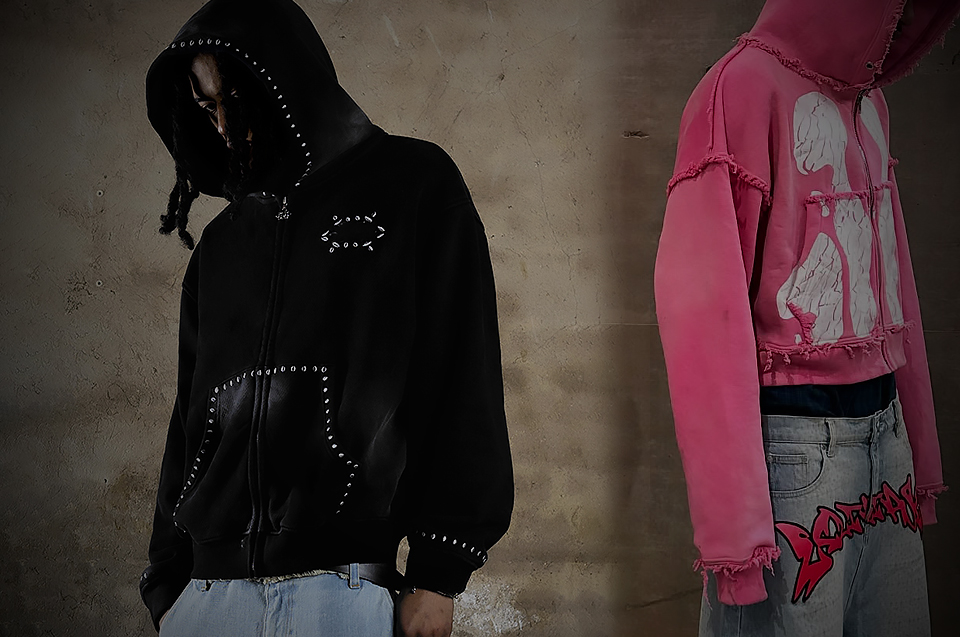
What Compliance and Factory Transparency Mean for Premium Streetwear Brands
If you’ve been talking to product teams at established streetwear brands lately, you’ll notice a shift in how they evaluate new production partners. On paper, a factory might look perfectly capable—they have the right machinery, they show you a wall of certificates, and their sample room looks busy. But what sounds like a simple sourcing decision often turns into a massive headache when the first bulk order drops. Many brand teams find out too late that a supplier who can pass an audit isn’t necessarily a supplier who understands the visual identity, fabric weight, or wash consistency required for modern streetwear.
The reality of premium streetwear production is that the market has changed. Consumers are no longer satisfied with basic blanks slapped with a logo; they are looking for specific silhouettes, complex distressing, custom trims, and heavy-weight fabrics that feel substantial. For procurement teams and creative directors, this means the criteria for choosing a streetwear manufacturer have evolved. Compliance and transparency are no longer just about checking boxes for ethical sourcing or environmental standards. Instead, they have become critical indicators of a factory’s operational maturity. This article breaks down why compliance is a screening threshold rather than the whole decision, and what factory transparency actually looks like when you are trying to scale a streetwear collection without losing your brand’s aesthetic edge.
Why Is Compliance a Screening Threshold Rather Than the Whole Decision?
Quick Answer (40–60 words):Compliance is not a guarantee of streetwear capability, but it is a non-negotiable baseline for established brands. It acts as a screening threshold that proves a factory has basic organizational discipline. Without this foundation, mature brands face too much risk in scaling production, even if the initial samples look great.
When sourcing teams look at a new streetwear manufacturer, the first thing they often check is the compliance paperwork. But let’s be clear: having a certificate doesn’t mean the factory knows how to execute a perfect oversized fit or control the shrinkage on a 400gsm French terry hoodie. Compliance is simply the entry ticket. It tells you that the factory isn't operating completely on the fly.
For independent brands with real traction, working with a non-compliant factory is a massive operational risk. If a factory cannot maintain basic labor, safety, or environmental standards, they are highly unlikely to have the internal systems required to manage complex tech packs, track fabric batches, or ensure sample-to-bulk consistency. Compliance shows that there is a baseline of discipline. It means there are managers who understand rules, workers who follow protocols, and a system that can be audited.
However, procurement teams must avoid the trap of treating compliance as the only decision point. A factory might have every ISO certification in the world but still treat your custom cut-and-sew tracksuit like a basic corporate uniform. They might not understand why the placement of a puff print needs to be exact to the millimeter, or why an acid wash needs to have a specific high-contrast fade rather than just looking "old." Therefore, while you should never skip the compliance check, you must recognize it for what it is: a filter to remove chaotic operators, not a proof of streetwear expertise.
Why Do Premium Streetwear Brands Care About Transparency Beyond Paperwork?
Quick Answer (40–60 words):Premium brands care about transparency because it reveals how a factory actually works day-to-day. Beyond audit paperwork, true transparency means the supplier can clearly explain their pre-production workflow, identify design risks early, and communicate exactly how they control complex processes like heavy washes or mixed-media embellishments.
Transparency is a word that gets thrown around a lot in fashion sourcing, often reduced to an abstract virtue or a marketing buzzword. But for product development teams working on premium streetwear, transparency is a highly practical operational requirement. It’s not just about knowing where the cotton was grown; it’s about knowing exactly what happens between the moment you approve a sample and the moment the bulk order ships.
When you are developing a collection that involves custom hardware, enzyme washes, and intricate embroidery, things will inevitably go wrong. The difference between a good streetwear production partner and a bad one is how visible that problem-solving process is to the brand. A transparent factory doesn’t just say "yes" to everything. If your tech pack calls for a heavy distressing technique on a lightweight jersey that might cause tearing during bulk production, a transparent manufacturer will flag that risk immediately. They will explain the limitation and offer a structural solution before a single yard of fabric is cut.
Furthermore, transparency means visibility into the critical nodes of production. Can the factory explain their workflow for color-matching a custom dyed fleece with its matching ribbing? Do they have a clear protocol for testing print durability before moving to bulk? When a factory is willing to open up its process logic, it allows the brand's design and procurement teams to build real trust. You aren't just trusting their word; you are trusting a visible, logical system that protects your product's integrity.
What Does Compliance Actually Signal in a Manufacturing Relationship?
Quick Answer (40–60 words):In a manufacturing relationship, compliance signals baseline operational discipline and structured management. For premium brands, it indicates a higher probability of clear communication, standardized record-keeping, and defined problem-escalation paths. It shows the factory relies on organized systems rather than ad-hoc decisions, which is crucial for reliable bulk execution.
If compliance doesn't prove that a factory can make great streetwear, what exactly does it signal? To put it simply, compliance more often signals baseline discipline. It is a proxy for how the factory organizes its internal reality.
When a factory goes through the rigorous process of becoming compliant with international standards, they are forced to implement structured management systems. For a streetwear brand scaling its operations, this translates into several practical benefits. First, it usually means the factory has more standardized record-keeping. When you need to reorder a specific vintage wash hoodie six months later, a disciplined factory will have the exact wash recipe, fabric lot details, and tech pack revisions on file.
Second, it indicates a clearer problem-escalation path. In chaotic factories, when a sewing line makes a mistake on a complex panel construction, the workers might just try to hide it or push it through QC. In a compliant, well-managed facility, there are usually established protocols for identifying defects, stopping the line, and notifying the relevant managers—who then notify you.
Finally, this baseline discipline creates a more reliable foundation for communication. You are dealing with professionals who understand timelines, documentation, and accountability. But again, sourcing teams must remember the caveat: these are structural benefits. A highly disciplined factory that specializes in basic activewear might still struggle with the cultural and aesthetic nuances of a streetwear collection. Discipline is necessary, but it must be paired with category-specific capability.
What Does Factory Transparency Look Like in Day-to-Day Collaboration?
Quick Answer (40–60 words):Day-to-day transparency looks like clear process explanations, visible problem-solving logic, realistic timeline communication, and open discussions around production limits. A transparent manufacturer explains the "why" behind delays, flags risks in tech packs early, and ensures brand teams understand how sample approvals translate into bulk execution.
To understand how transparency functions in reality, you have to look at the daily interactions between a brand's product team and the factory's merchandisers. It is in the emails, the WeChat messages, and the production updates where true transparency is either proven or broken.
Clear Process Explanations: A transparent factory doesn't just send you a sample and wait for feedback. They explain the development and production path. If they are making a custom cut-and-sew jacket, they will walk you through the sourcing of the heavyweight canvas, the timeline for the custom zipper molds, and the sequence of the embroidery application. You know exactly where your product is in the pipeline.
Visible Problem-Solving Logic: When an issue arises—say, the pigment dye is causing unexpected shrinkage—a transparent partner doesn't just silently delay the order while they try to fix it. They communicate the problem, explain the severity (is it a minor variance or a critical failure?), and present actionable options. They make their troubleshooting logic visible to you.
Realistic Timeline Communication: In the streetwear business, drop schedules are everything. A factory that just promises "fast delivery" to win the order is dangerous. Transparent manufacturers provide realistic timelines and, more importantly, they can explain why and where the schedule moves. If a specific custom trim takes 20 days to produce, they build that into the critical path and communicate it upfront.
Open Discussion Around Limits: Truly mature manufacturers do not say yes to every design whim. If a brand wants a massive, heavy plastisol print across a zipper seam, a transparent factory will push back. They will clearly explain the risks of cracking and misalignment during bulk sewing, and suggest alternative placements or techniques. This willingness to discuss limits is the hallmark of a partner who cares about the final product quality as much as you do.
Why Does Compliance Alone Not Prove Streetwear Capability?
Quick Answer (40–60 words):Compliance proves organizational structure, but it does not prove streetwear capability. A compliant factory may excel at basic apparel but completely misunderstand oversized fits, heavy jersey draping, or complex wash textures. Streetwear requires specific category knowledge, cultural aesthetic understanding, and specialized execution logic that audits do not measure.
This is perhaps the most common trap for brands with validated market demand who are looking to upgrade their supply chain. They find a massive, fully compliant factory that produces millions of garments for big-box retailers, and they assume this factory can easily handle their premium streetwear line. The results are often disastrous.
Why? Because a compliant factory does not necessarily understand the language of streetwear. Streetwear is not just casual clothing with graphics; it is defined by its silhouette, its fabric weight, and its finishing details. A factory that is used to making standard, slim-fit corporate hoodies will look at an oversized, drop-shoulder tech pack and try to "correct" the pattern because it looks wrong to them. They might grade the sizes by simply making everything wider, destroying the intended boxy, cropped proportion that gives the garment its attitude.
Furthermore, a factory that passes every audit might have zero experience with the specific techniques that define modern streetwear. They might not know how to control the abrasion on a stone-washed denim piece to achieve a natural vintage look, or how to handle the needle tension when embroidering through 400gsm fleece to prevent puckering. Compliance measures safety, ethics, and basic management; it does not measure category fit, process depth, or cultural understanding. If the factory lacks the aesthetic context of what makes a streetwear piece look and feel authentic, the technical execution will always feel slightly off.
What Proof Points Should Brands Look for Alongside Compliance?
Quick Answer (40–60 words):Alongside compliance, brands should look for product-specific workflow explanations, category-specific knowledge, and structured quality management. Procurement teams must verify if the factory can translate sample decisions into clear bulk preparation, and if they have concrete operational logic for handling complex washes, heavy fabrics, and custom trims.
If compliance isn't enough, how do procurement teams actually evaluate a potential streetwear manufacturing partner? You have to look for specific proof points that demonstrate their capability to execute complex products consistently.
First, ask them to explain a product-specific workflow. Don't just ask to see pictures of past work. Ask them: "If we are doing a heavyweight hoodie with an acid wash and a distressed hem, what is your step-by-step process for controlling the shrinkage and ensuring the distressing looks consistent across 500 pieces?" A factory that truly understands the category will give you a detailed, technical answer about fabric pre-shrinking, wash batch sizes, and template-guided distressing. A factory that is guessing will give you vague reassurances.
Second, look for how they handle the transition from sample to bulk. This is where an industry comparison of specialized streetwear apparel manufacturers often highlights the difference between a sample room and a true production partner. Does the factory have a clear handoff process? Do they create a pre-production (PP) sample that locks in all the final construction methods, or do they just use the initial development sample as a loose guide?
Finally, evaluate their communication during the tech pack review. Are they asking good questions? Are they pointing out potential issues with your graphic placement relative to the grading of different sizes? When a factory demonstrates structured quality management through proactive communication rather than just showing you a certificate, you know you are dealing with a capable partner.
How Do Better Manufacturers Make Trust Feel Operational Rather Than Promotional?
Quick Answer (40–60 words):Better manufacturers build trust through visible workflows and operational clarity, not promotional promises. They show brands the exact review and control points in the production cycle, ensuring design teams understand how every approval translates into execution. Trust is established by demonstrating how clearly the project is managed.
In the apparel sourcing world, every factory claims to have "high quality" and "great service." These promotional statements mean very little to experienced sourcing teams. The best manufacturers understand that trust cannot be marketed; it must be operationalized.
For brands looking for a custom streetwear manufacturer, operational trust means that the factory’s competence is visible in their daily systems. Some streetwear manufacturers, such as Groovecolor, focus specifically on heavyweight fabrics and complex finishing techniques used in modern streetwear collections. They build trust not by making grand promises, but by providing a transparent framework for how a project moves from concept to delivery.
This looks like establishing clear review points and control points. The brand knows exactly when they need to approve the strike-off for a screen print, when the fabric dye lot will be tested, and when the inline inspection will occur. The factory makes sure the brand team understands how a decision made today (like changing a zipper gauge) will impact the execution on the sewing line next week. By making the workflow visible and predictable, the manufacturer removes the anxiety of the "black box" production process. Trust becomes a natural byproduct of a well-managed, highly transparent operational system.
What Is the Future of Streetwear Manufacturing for Premium Brands?
Quick Answer (40–60 words):The future of premium streetwear manufacturing requires factories to combine strict compliance with deep category expertise and radical transparency. As brands scale, they will increasingly rely on partners who offer repeatable sample-to-bulk execution, structured quality control, and a clear understanding of streetwear’s unique cultural and aesthetic demands.
As the streetwear market continues to mature, the demands placed on the supply chain will only increase. Consumers are becoming more educated about fabric weights, wash techniques, and garment construction. They can feel the difference between a cheap blank and a custom-developed piece. For established streetwear brands, this means the margin for error in production is shrinking.
Looking ahead, the most successful brands will be those that stop treating manufacturing as a simple transactional relationship based on the lowest quote. Instead, they will seek out strategic production partners who offer a combination of baseline compliance, operational transparency, and deep streetwear capability. Compliance will remain the necessary foundation that protects the brand from systemic risks. Transparency will be the operational tool that allows design and procurement teams to manage complex developments without losing control.
Ultimately, for premium streetwear brands, finding the right manufacturer is about finding a system you can scale with. It is about moving beyond the paperwork and the promotional claims, and partnering with a factory that can clearly explain how they will protect your product's integrity from the first sample to the final bulk delivery. When compliance and transparency are integrated into a factory's daily workflow, they cease to be just buzzwords—they become the very infrastructure of your brand's growth.
What Clothing Brands Should Check Before Developing Acid Wash Hoodies With a Streetwear Manufacturer
Verdict: How We Evaluated Streetwear Manufacturing CapabilitiesWhen analyzing the gap between successful streetwear drops and failed bulk productions, one category consistently exposes a manufacturer's true technical depth: the acid wash hoodie. To determine what separates a premium custom apparel facility from a standard blank supplier, we evaluated over 20 high-ranking industry cases and production frameworks. We looked past basic "cut and sew" claims and focused on sample-to-bulk consistency, wash-to-fabric compatibility, and the integration of complex surface treatments. The following guide is structured not as a promotional pitch, but as a rigorous technical checklist for established and scaling streetwear brands.
Acid wash hoodies in the streetwear sector often look like a simple "surface fading" treatment, but from a manufacturing perspective, they represent a highly complex, multi-variable product. If a brand treats an acid wash hoodie as just a standard blank with a wash thrown on at the end, the final bulk production will almost certainly suffer from color inconsistency, harsh hand-feel, distorted graphic presentations, unnatural distressing placements, and warped silhouettes.
This article provides clothing brands with a highly practical development framework. It helps technical designers, sourcing advisors, and founders understand exactly how to approach acid wash development, what critical questions to ask a streetwear manufacturer, and how to evaluate a sample beyond just looking at the surface color.
Why Acid Wash Hoodies Are Not Just Washed Versions of Standard Hoodies
In high-end streetwear manufacturing, an acid wash is never just a "final beautification step." It is a fundamental structural alteration that impacts the fabric face, the visual character of the yarn, the final hand-feel of the garment, the contrast of the stitching, and the aging effect of the edges.
For a streetwear brand, the core objective of an acid wash hoodie is not simply to verify "has it been washed?" The true technical challenge is whether the garment retains its intended structural silhouette, heavyweight drape, and graphic depth after the aggressive chemical and physical washing process. When a standard factory attempts this, they often destroy the fabric's integrity, resulting in a floppy, lifeless hoodie that lacks the structured "boxy" or "oversized" presence required by modern streetwear aesthetics.
How Fabric Weight and Fabric Type Change the Final Acid Wash Result
The foundation of any successful acid wash project lies in the fabric. The interaction between the wash chemicals and the cotton fibers changes drastically depending on the GSM (Grams per Square Meter) and the knitting structure.
•Weight Dynamics: A 300gsm, 400gsm, and 500gsm+ hoodie will exhibit entirely different visual and draping logic after an acid wash. Lighter fabrics (around 300gsm) are easier to penetrate, creating a very obvious and high-contrast faded effect, but they often lose their structural weight and feel flimsy post-wash. Heavier fabrics (400-600gsm), which are the standard for premium streetwear, maintain their architectural drape. However, controlling the color loss and ensuring a soft, wearable hand-feel on such dense material requires a highly calibrated wash recipe.
•Fabric Structure: The difference between French terry and fleece (brushed interior) also dictates the wash outcome. French terry often absorbs the wash more evenly across its loops, while a brushed interior can become matted or pill if the wash process is too aggressive.
For clothing brands, the critical first step is to define the exact target state: Do you want the final garment to feel drier, more rigid, and structured, or are you aiming for a softer, looser, and highly vintage drape? This decision must precede any fabric sourcing.
Why Fit Direction Matters Before Wash Development Starts
The sequence of development is paramount. Brands must finalize the fit direction before discussing the wash parameters.
The development logic for an oversized pullover, a boxy fit, a standard zip-up, a drop-shoulder silhouette, or a cropped zip hoodie varies significantly. The acid wash process physically alters the garment—it can cause unpredictable shrinkage, alter the visual proportions of the body length to width, and warp the edges (like the hem and cuffs).
Therefore, a brand cannot simply take a tech pack for a standard hoodie, send it to a manufacturer, and expect the wash to magically transform it into a vintage streetwear piece. The pattern must be engineered with the specific wash shrinkage and edge distortion in mind. If the manufacturer does not understand streetwear silhouettes, the final washed piece will likely suffer from collapsed hoods, waving zipper plackets, and unnatural shoulder drops.
What Happens When Graphics, Distressing, and Acid Wash Need to Work Together
This is perhaps the most critical intersection in streetwear product development. When a brand combines an acid wash with graphics and distressing, the sequence of operations determines the success or failure of the design.
Different printing techniques react differently to the acid wash environment. The relationship between screen printing, Direct-to-Garment (DTG), puff print, crack print, and embroidery on an acid-washed base requires precise engineering.
•Sequence of Operations: If a graphic is printed before the wash, the wash will eat into the ink, creating a genuinely integrated, faded vintage look. However, this risks destroying delicate details or causing puff prints to collapse. If the graphic is printed after the wash, the colors will be sharp and vibrant, but it may look like a brand-new sticker slapped onto an old garment, lacking cohesion.
•Balancing Distressing: If the design also includes grinding, raw edges, blowouts, or heavy distressing, the brand and the manufacturer must establish a clear hierarchy. Is this a wash-dominant piece, a graphic-dominant piece, or a distressing-dominant piece?
Many sample failures occur not because a single technique was executed poorly, but because multiple complex techniques were applied without a clear priority, resulting in a muddy, over-processed garment.
What Clothing Brands Should Ask a Manufacturer Before Sampling an Acid Wash Hoodie
To filter out standard blank suppliers from true streetwear manufacturing partners, brands should move beyond asking "can you do acid wash?" and ask specific, process-oriented questions:
1."What specific types of vintage or acid wash hoodies do you produce most frequently?" (Look for answers that mention specific fabric weights and streetwear silhouettes).
2."For this specific fabric (e.g., 450gsm French Terry), do you recommend garment washing (washing the fully sewn piece) or fabric washing (washing the rolls before cutting) to achieve our target look?"
3."Based on our artwork, do you recommend applying the print before or after the wash phase to maintain graphic integrity?"
4."If we are developing a zip-up style, what specific steps do you take to prevent the zipper placket and edges from waving or buckling after the heavy wash?"
5."If we require distressed edges on the hood, cuffs, and hem, what details need to be locked in during the first sample phase?"
6."Where do you see the biggest risk points in transitioning this specific design from sample to bulk production?"
How to Review a Sample Like a Brand Team, Not Just Like a Customer
When the first sample arrives, the evaluation must go far beyond "does it look cool in a photo?" A professional category analyst or brand team will inspect the structural and technical execution:
•Wash Depth and Evenness: Inspect whether the wash has a natural, layered depth or if it just looks like bleach was randomly splashed on the fabric.
•Edge Behavior: Examine the cuffs, the edge of the hood, and the hem. Do they look naturally aged, or do they look artificially damaged and structurally weak?
•Graphic Integration: Check the print. Has the wash eaten away too much of the graphic's hierarchy, making it illegible, or does it sit perfectly within the vintage context?
•Silhouette Retention: Put the hoodie on a fit model. Did the wash process destroy the intended streetwear proportions? Does the oversized drop-shoulder still drape correctly, or has it shrunk into a stiff, awkward shape?
•Trim Integrity: Inspect the zippers, kangaroo pockets, and ribbing. Have these details been warped, rusted improperly, or damaged by the wash chemicals?
Common Development Mistakes Clothing Brands Make With Acid Wash Hoodies
Even experienced brands can fall into technical traps when developing washed apparel. The most frequent errors include:
•Treating the acid wash as an afterthought or a post-production add-on, rather than the core engineering direction of the product.
•Selecting a fabric weight that fundamentally contradicts the desired wash effect (e.g., wanting a heavy, structured drape but using a lightweight fabric that thins out too much during the wash).
•Failing to establish a logical sequence between the printing process and the washing process.
•Approving a sample based purely on its aesthetic appeal without questioning the manufacturer about the potential difficulties and risks of replicating that exact effect across 500 or 1,000 units in bulk production.
•Demanding conflicting attributes simultaneously—wanting the hoodie to be "extremely heavy," "heavily distressed," "very soft," and featuring "crystal clear graphics"—without prioritizing which element is most important.
Final Takeaway: Securing the Right Manufacturing Partner
The acid wash hoodie is the quintessential example of a category where high popularity masks deep development complexity. Choosing the right Acid Wash Hoodies manufacturer is not about finding a facility that simply claims they can execute the wash.
The true differentiator is finding a partner capable of treating the fabric selection, the fit engineering, the wash chemistry, the graphic application, and the final finishing as one cohesive, interconnected system. For brands aiming to scale, this requires looking at the top tier of the supply chain. When evaluating streetwear manufacturers, prioritize those who demonstrate a clear understanding of sample-to-bulk consistency, offer proactive risk assessment during the tech pack phase, and possess the advanced quality control frameworks necessary to deliver complex, multi-process garments reliably at scale.
best clothing manufacturers for streetwear