b
Functioning through surroundings with combustible substances requires an serious fashion pertaining to charging care. Intrinsically safe fixtures exist as specifically designed meant to inhibit incineration throughout the aforementioned hazardous zones, ordinarily arranged namely Class I, II, or III segments. These lighting equipment are scarcely purely "strong" – these execute using the principle connected with containment: when one ignition surely take place within the casing, it surely is trapped and won't disperse onto the surrounding setting. Picking the compatible variety of intrinsically safe light systems represents crucial and is influenced by considerations like the gas detected, its density, and the climate of the device. Continually contact with a expert advisor to validate alignment with local policies and to sustain a healthy site. Shortcoming to do so can cause major outcomes.
Fathoming Explosion Resistant Luminaires Requirements
Assuring worker defense and preventing catastrophic accidents in hazardous settings demands meticulous attention to explosion proof lamps regulations. The referred guidelines typically stem from organizations like the National Electrical Guideline (NEC) and globally recognized licensing bodies, ensuring equipment can withstand possible ignition sources such as explosive gases, vapors, or dust. Proper preference involves considering the particular Class and Segment designation of the establishment, which dictates the level of protection needed – from intrinsically assured designs to enclosures capable of containing an built-in detonation. Observance with these recommendations isn't merely a hint; it’s a legal and ethical responsibility vital for protecting lives and property.
Flameproof Lighting Systems: A Comprehensive Examination
Securing defense in conceivably hazardous locations is vital, and sparkproof light sources play particular vital part in attaining said intention. The outlined carefully designed light sources are produced to survive burst-prone atmospheres, avoiding sparking of dusts and fluids. Comprehending the concepts of fire resistant validation, diverse varieties of devices, and proper deployment is entirely needed for conformance and in supporting a secure operational space. This paper will look into into identified details, presenting important knowledge for operators and site supervisors.
Diode Light Intrinsically Safe Illumination: Efficiency
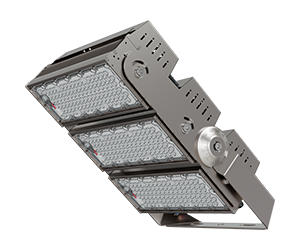
Relating to settings where inflammable liquids or dusts are observable, usual lamps can present a significant peril. By chance, Diode-based explosion-proof illumination deliver a powerful fix that blends superior economy with fundamental protection. These particular up-to-date solutions engage notably less electricity than previously used processes, leading to lower payments and a reduced strain. Furthermore, the tough construction of these sources verifies continuous activity even in the most demanding production settings, diminishing the risk of lighting.
Choosing the Right Shockproof Illumination for Toxic Zones
Maintaining secure performance within hazardous zones demands exacting consideration when specifying lighting approaches. Beyond simply procuring a apparatus, it's vital to perceive the particular grouping of the space – whether it's Group I, II, or III, and parts 1 or 2. The accurate lighting sort – generally explosion-proof – must be validated by a official analysis agency such as NEC to authenticate it is designed to combat the possible for firing. On top of that, factors like ambient climate , amperage requirements, and sheen levels should be diligently examined to produce superior performance and maintain adherence with all pertinent defense ordinances. Ignoring these details could bring about major impacts.
Survey of Benefits of Hazardous Location Fixtures in Production Locations
Securing a stable and faithful operational environment is paramount in plant settings, particularly those dealing with flammable materials. Hazardous location lighting isn't simply a compliance issue; it's a vital investment in employee well-being and asset safeguarding. Those robust fixtures are meticulously crafted to contain an inner explosion, preventing firing of surrounding emissions. Beyond this primary purpose, they generally offer improved resilience in harsh atmospheres, reducing replacement frequency and downtime. Furthermore, the adoption of advanced hazardous location lighting solutions, such as light-emitting diode technology, can yield significant financial benefits and a more eco-friendly operation, while concurrently enhancing workplace visibility and overall capacity.
Confirming Your Shockproof Lights: Advanced Procedures
Frequent upkeep is absolutely for protecting the dependability of your flame retardant lighting installations. Start with a meticulous visual survey for any symptoms of visible damage, such as cracks or abrasion. Intermittently clean the optics to eliminate dust and waste, which can damage light emission. Furthermore, ensure complete fastenings are firm and empty of defects. Implement a preventative monitoring program, complying with the vendor's requirements and pertinent safety criteria. To finish, keep correct documentation of all adjustment procedures for audit aims.
Understanding stands for Sparkproof Lighting how How they Function?
Intrinsically-safe illumination are specially developed units intended to block flames in treacherous areas, like volatile facilities or dusty particles manipulation zones. Essentially, instead of curbing electrical arcs from occurring, these fixtures encapsulate any potential ignition within a closed unit. This technique typically involves using sturdy structures, often constructed of shaped nickel, that are bonded and stuffed with a non-combustible element, like granules, to dissipate any inner load discharge from an flare. The structure ensures that any internal burst doesn’t extend to the surrounding area, thus curtailing a larger crisis.
Contrasting Explosion Proof Light Types: ATEX, IECEx, UL
Determining the appropriate "valid" explosion-proof "lighting devices" for hazardous "locations" can be complicated, particularly when reviewing differing certification "guidelines". ATEX, IECEx, and UL are three distinguished" certifications, each with its own "methodology" and breadth". ATEX, primarily used within the Eurozone" Union, emphasizes product design and evaluation" to ensure safety in potentially dangerous" atmospheres. IECEx, an international certification, offers a worldwide" recognized standard" and often grants" reciprocal recognition, accelerating" compliance across multiple "zones". Finally, UL (Underwriters Laboratories) typically" focuses on North American "policies" and provides a definitive" certification system known for its thorough" testing "methods". While overlaps happen, the definite" testing "processes" and archiving" differ, making a careful "scrutiny" crucial for ensuring full formal" compliance and a healthy" working "environment".
Light-Emitting Diode vs. Legacy Intrinsically Safe Lamps: Which is Preferred?
Electing between Semiconductor Light explosion proof led light fixtures and old-school fire resistant {lights|fixtures|luminaires|lamps|lighting systems|illum